BLACK ON BLACK OR BLACK IN CRIME?


I come from Ghana where growing up life generally moved at a slower and safer pace as compared to what I found on the streets of London, and indeed before arriving here I envisaged a safer place, counting on the sophisticated policing and 'more'; so, wasn’t I surprised when I arrived on the North Peckham Estates in 1990 as a foreign student from Ghana? Yes I was. These were the days it had gained notoriety in London for being one of the most crime-ridden and deprived estates? There were many black brothers and sisters living in this estates, which for me would have eased my ‘home sickness’, seeing a lot of people who looked like me, but for the negative stories that defined the people and place as 'bad'. They said it was violent, in fact evil, but come to think of it, that was home for many wonderful people; we even had a vibrant black Church meeting in the community hall, and I became a member of that congregation. There were many fantastic families living in the estates, raising some very intelligent children, who have gone on to do great things in life. I still have friends living on the newly designed estates. Whatever description insiders gave to the place, wouldn’t just change the minds of outsiders, because it was firmly projected in the minds of Londoners and endorsed by the media; surely there was a lot of truth in whatever was being said, because sometimes very bad things happened here. Tragic incidents like the murder of little Damilola happened here – and such was the shock and pain, the story filled the newsrooms and newspapers for many years.
Upon arrival from Africa I was taught to be vigilant and rather mindful of my fellow black men, because I was more likely to be attacked by a black fellow in this place; that certainly broke my heart, I thought we were brothers? I quizzed many times. Why should I fear my fellow black man? He is supposed to be my brother, especially in a place where we are the minority, with common problems, he must become my keeper and comrade in a common struggle for equality and fair treatment by the system. However that was far from true, we were separated by suspicion and fear. We never trusted each other and many still don’t. I was schooled very quickly that in London, and especially in my area, everyone you meet must be approached with caution. I remember arguing that I didn’t have much on me to invite an attack – a poor student from Africa? But that didn’t take away my fear, of mostly other black men?
I was schooled by my flatmates on how to stay safe on the Estates, and indeed every time I came out of the flat, I was sick with apprehension, that made me look around several times, as though someone was always out there to get you. Especially at night I walked with speed, and walked away or far apart from other black men I met to or from the house. Thank God I never saw or encountered any violence while living on the estate, and I bet the other person meeting me also walked pass me with the same fear and suspicion.
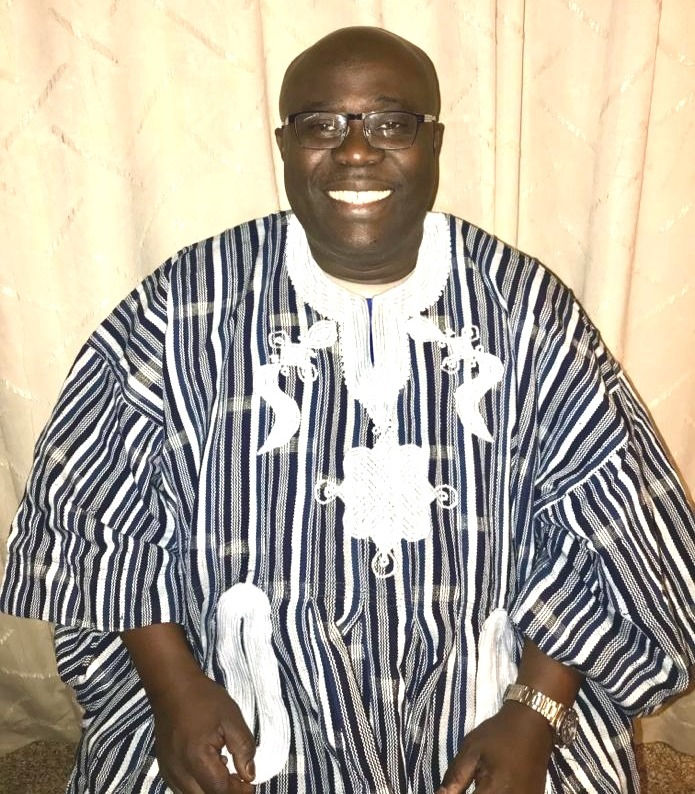
Black on black violence is real and never to be ignored or underestimated, however my many years of observing, now as a Pastor and Community Development Practitioner in the city of London, have altered my mindset and addressed my earlier prejudices. There is certainly more to this. Why would a minority group with common problems hate ourselves so much, we would want to turn against ourselves? Time and experience have given me another perspective of black on black violence. In fact it must be called Black In Crime and not black on black, and unfortunately this evil grows bigger and bigger in the inner city, covering many more communities and people groups. It must not be described as a problem blacks create for ourselves, but seen as an inner-city challenge, with multi faceted causes. In my thirty years of living in this city, I have literally, week in week out, sat in front of my TV and wept over the unnecessary loss of precious lives, especially as the age of the victims keeps getting lower and lower.
Wind the clock a few years forward, and I have my own teenage children, growing not in North Peckham, but in another 'challenging' part of the city, and boy! Wasn’t I afraid sometimes? No, 'sometimes' is an understatement, all the time, especially when they were out late. My son was once attacked in his car, only for them to say ‘no, no, he is not the one’, mistaken identity nearly cost my son his life, and who was attacking him? other black men! I personally know families whose children have been snatched from them, in death, with the other (offender) sadly losing theirs too, as they languish in prison. In the weeks before the Covid-19 lock-down, there wasn’t a week someone was not reported dead or fatally wounded in our inner-city communities. Covid-19 is taking away a lot of precious lives, but staying indoors have preserved some vulnerable youth too, but I am beginning to worry about what happens when these youth are released back onto our streets, especially how just ten minutes from where I live, 24 years old David Gomoh, a graduate and NHS worker was brutally murdered two weeks ago during the lock-down. Very sadly his father had died of Covid-19, waiting to be buried. Again, two black youth, an 18 and 16-year-old boy have been charged with killing the 24-year-old outside his east London home. ANOTHER BLACK ON BLACK VIOLENCE?
I believe strongly that we as black people have to treat this as a shared problem, to be tackled from the roots, i.e. within the family, our churches, schools and more, and this work must start bright and early, and it must be ALL HANDS ON DECK! I am calling upon everyone in our community to make this our problem, but I hope the authorities unlike us, do not treat this as a simple ‘black problem’. We will fail at finding a lasting solution if we call it a black problem. Of course comparatively it looks ‘far too many’ if you consider that we are a minority in the city, making others wonder, with some ostracising us for being ‘like this’?, without looking at the bigger picture.
We must look at our black on black issues from another perspective, and I am tempted to give it a new name, and only in doing so can a proper and lasting solution become conceivable. These kind of crimes should be grouped among all others, as an inner-city challenge. Such undesirable situations and the people perpetrating them are the products of a system that was built upon fragile foundations. Products of broken homes and weak families, who have to face untold marginalisation and deprivation throughout their lives. Many lack the basic things of life; things others even take for granted comes to some of these youth with a struggle - things like one good meal in the day, a warm house, parents who have a little time to spare in the week for some quality boding, and some little money left over after the many expenses to cloth them well, not counting entertainment and more, which happens to be a necessity for many in the country.
The fragile foundations I am talking about is massive and may take a long time to strengthen, but it takes the effort of all the systems and peoples. These are the common issues often seen by others as a cliche, when mentioned - unfortunately that is what it is: poverty, joblessness, marginalisation, unfair-perceptions and definitions by others of who they think we are, and all these truly arising from embedded racism, classism and outright snobbery by the privileged; and such is done against even low income white families who live side by side with us in the inner-city, while dividing us with the same fear and suspicion.
Our youth are denied opportunities that comes to others so easily. The truth be said, that there are people who are living far beyond our communities, whose nefarious activities extend into our troubled communities. These external influences causes ripple effects of aggression and violence that may easily be called black on black, however it is black in crime, in cahoots with all the 'others'. If the godfathers living far away from the hotpots are not dealt with, how will the pawns in the game stop passing for big boys, while the real big boys jet around in private jets and hit their gulf balls on sunny picturesque grounds?
Black on black’ or better still, black in crime, is a national problem deserving the right resources in cash and man hours from government, as well as funding voluntary groups to work at grassroots level, all to truly nip it in the bud; it must be a collaboration of government and groups still present in our communities, which include faith groups, who unfortunately are overlooked when the government is looking for community development partners. The truth is that many youth workers, who have the ability to engage the youth at a tender age, have lost their jobs, with projects closed down, due to the lack of funding. There are many who want to do something about this menace but lack the right resources. Last summer one of the youth in our church wrote a short play and we spent time rehearsing in my garden, because we couldn't hire a space for the rehearsal. My wife cooked and entertained them and so they really enjoyed their time together and wished we could deliver more but that was how far our resources could go for the moment, and this was even done on private property and we were not insured to do so, I believe so. I believe we can come out of these dark moments, but it is a real race against time to grab them while they are young – he who has the resources gets them first; the corrupter, who is looking for the young person to initiate or good people like you and I who have the best of intentions for them? We must not stand unconcerned, every little helps, while calling it what it really is - BLACK IN CRIME.


Comments