FEELING BLACK

Updated: May 29, 2024
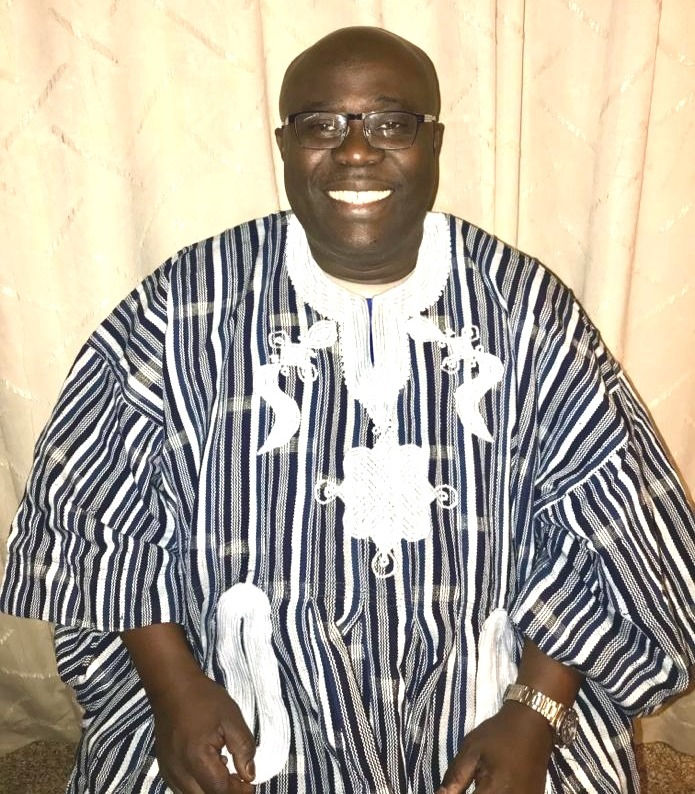
I published this article sometime around the days of the George Floyd saga, which stirred up so many emotions worldwide. I am reposting a revised version of this piece, which raised some pertinent issues that continue to be of immense concern to members of my community, here in the diaspora and on the mother continent, especially when many after Floyd continue to become victims, like Chris Kaba in London and Senior Airman Roger Fortson, whose time of relaxation was interrupted by police men who got the wrong address and shot like an animal.
Some may wonder why I write blogs about black issues when all they expect me to preach to the suppliants is about heaven and the afterlife; the answer is that God says we must pray "thine will be done on earth as it is in heaven". God's will for a life in eternity is joy and peace forever more. In heaven, we will have a life without prejudices and oppression; it will be nothing like the evils that have tainted our earthly existence. God's word says we must pray the same for the earth.
Those who see the work of the ministry as a heavenly-bound mission without earthly concerns have the right to be curious about my motives, but to reiterate, my motives are noble. They will remain important to me as long as certain powers continue to measure up all kinds of injustices to the black race worldwide.
The only way we can improve race relations is to name and shame these evils that are being perpetrated in the open without shame. I had been advocating these types of issues long before that vile racist act led to the untimely death of George Floyd, far away in Minneapolis, Minnesota. Still, honestly, Floyd's death gave me more reason to continue what I had been advocating all the while.
We can use the same pulpits from which we preach love, grace, healing, the second coming of Christ, and more to preach against the injustices and inequalities that exist openly in our world. Sadly, the Pentecostal/charismatic Church is very quiet on matters of justice and injustice. Some of my ministry acquaintances will not like to see or hear me touch on these sensitive subjects. Still, I believe those who believe the entirety of the Bible must also acknowledge that justice is as close to the heart of God as grace, righteousness, and holiness are.
I joined the many voices from all over the world, Black, White, Hispanic, and Asian, to condemn this barbaric act that was committed in broad daylight by 'peace officers', who without fear of the law or honour unto God, murdered a living soul, who begged for his life, crying, 'I can't breathe and Mama, Mama". These images will forever play back in our minds whenever we see another injustice.
So many of these injustices may not lead to death, but it has the power to ruin a man's entire life through emotional trauma. When I see such evils done against a fellow black man, I feel my 'blackness' more and more, and again and again. This blackness is not about our beautiful skin colours in varied tones that we are blessed with, but the sting of its intentional reproach through hatred, disrespect, marginalisation and devaluation of our persons through unfair distribution of wealth and cultural obliterations.
I ask how our skin colour can invite this much trouble worldwide when we don't choose our colour. Sadly, good church people say, "Don't talk about it; live that for the Panthers". My question is, "What does God say about these inequalities?
The story of my life is that I grew up in what may qualify as a middle-class Ghanaian family. I was born to a lovely, educated couple who raised me to be a proud African man. I also grew up around many dynamic business and professional people, many of whom were of noble birth and some of whom were royalty. I was so proud of who I was until all that was challenged after coming through Heathrow Terminal Three sometime in the summer of 1990.
The first time I turned up at Heathrow Airport was when I began to feel and notice my 'differentness' in that awkward manner. Wearing a cream suit and red tie and speaking faultless English, I was interviewed by this irritant and angry-looking Immigration Officer who couldn't believe it was my first time travelling outside of West Africa; he talked down to you like some 'small boy'. He spoke with a pitiful look. Whereas other nationals from some seemingly prospered nations walked through immigration quickly, ours is always a tug of war.
The officer was so unwelcoming, prying through my very person with funny looks. He thought I was lying and insisted I had been to the UK before, and I said no. He probed further, walking with me to the baggage area to search through my bags to see if they could find anything that could incriminate me. He engaged me in varied conversations and confessed that I looked so sharp and well-spoken that he couldn't believe I had never travelled out of my country. I had to convince him there were several in my country who had never been anywhere else in their lifetime, but very education and knowledgeable. I was a bit bruised when I left there, but not battered. I knew from then I was on an invisible leash and had to be extra careful wherever I was.
Even though I had seen many films particularly about the injustices in the USA during the Martin Luther King era and could empathize with them, I had never felt that kind of 'blackness' before in Ghana. Honestly, in Ghana, one may suffer discrimination because of your tribe or ethnicity, which is equally evil, but we never suffer from simply being black. You didn't suddenly walk into a place and become conscious of your 'blackness'; however, since being in England, I have seen and experienced my fair share of events that have brought out my 'blackness' like never before; this is because the perpetrator makes you realize how different you are.
I have recently shared my experience of racism and injustice right here on the streets of London in other blogs. My ruddiest awakening happened like this: "One afternoon, a lovely white lady rammed into my car from a side street and immediately accepted her fault and begged for forgiveness, saying she was running late to work and that is why she was driving like that. She kept asking if I was all right and expressing concern until the police arrived, and immediately, everything was against me.
PC 'B...s' was the responding officer's name. I still remember his name after thirty-two years and have mentioned him in my prayers several times, at first in anger, till Christ convicted me, then I began to forgive him and pray for him that God will change his heart too. When he arrived on the accident scene, it was clear he wasn't there "FOR US, BUT FOR HER ONLY" Refusing to treat me as the victim, he went on to harass me, to the point of threatening to call for backup if I talked back. Sadly, the few bystanders in this white-populated area defended the perpetrator and offered various false versions of the accident. What was the heaviest blow was when they called me black this and that, go back to your '....' and the policeman didn't stop them but threatened me further.
In the end, I was the one being charged with reckless driving, a matter that ended up in court, which could have easily landed me an innocent man in jail. I always say I know I am black, but on that day, I felt blacker than ever. If you wanted to know how one can feel black? Ask a man who has suffered injustice from those who don't look exactly like himself. You can feel black until black becomes terrifying, embarrassing sometimes, but simply irritating when you have to be extra careful, doing the normal things, others do without fear, like driving down the road and fearing to be pulled over by police.
Soon after arriving in England as a student, I got my first job working close to a few white gentlemen, and truthfully, every one of them was very respectful until Brian (name changed) arrived. One day, Brian told me he wanted to have a word with me, and the long and short of it was that he wanted me to be aware that he didn't like black people very much, but he would try and be civil around me, and if peradventure, he came across as rude or untoward, to forgive him. He went ahead to say he had never stood so close to a black person before, so again, to forgive him if he was looking uncomfortable around me. For the first time, I looked at my skin with shock, "what is wrong with me?" I wondered. I was so paralyzed and shocked; honestly, this affected me for a long time. I didn't know whether to smash his face or embrace him for his honesty; I needed time to process what had just happened, so I took a break and walked away for a while. From that moment on, I walked about being more conscious about my skin colour than I had been. If I stood next to a white man on a packed train, I was careful not to accidentally rub against them, just in case they were like Brian; I didn't want to cause them any form of upset. These are the moments you felt really really BLACK!
Race and equality issues must become essential to us within the Church because healing must come from the house of God and flow into the community. The Bible says in Psalm 46:4, "There is a river whose streams delight the city of God, the holy place where the Most-High dwells". When you jump into this river, not only do your inadequacies wash away, but your prejudices must also wash away; in fact, you must become "colourless" in your views and subsequent actions. Even though we may never have a world free from racism, tribalism, and extreme nationalism, which unfortunately leads to xenophobia, the world will undoubtedly become a better place if people of faith start one by one to take a dip in this river that cleanses us from our prejudices, but to do this we first and foremost have to accept that we have been made dirty by some warped ideas we have entertained about people who do not look exactly like us, and of course applies to black, white, or Asian.
Even though the churches in my community are 'hush, hush' on race issues, they do exist and cannot be swept under the carpet. I have a special assignment among my people: to bring a word that heals them from our painful experiences, to find a word that places them above their limitations, and find hope in the power of God that leads to healing and reconciliation. Centuries-old barriers which continuously keeps us apart, must be broken down, if not physically at least in our opinions and emotions.
In ending, I would like to quote the Rev John Perkins, whose ministry was full of reconciliation, even when he was beaten and tortured during the civil rights movement in America; he said: "I am persuaded that the Church, as the steward of this gospel, holds the key to justice in our society. Either justice will come through us or not come at all."


Comments